
Figure 1:
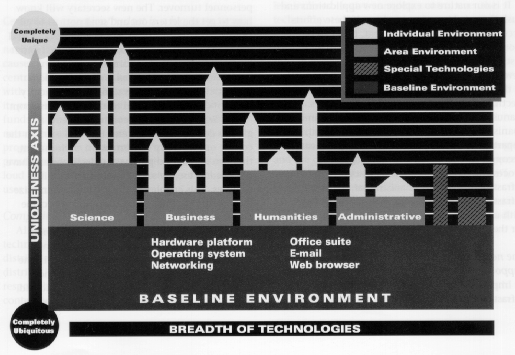
The diagram above illustrates the concept of hierarchical standard environments. The lowest level represents the institutional information technology infrastructure. The functional capabilities in this level are made available to everyone in the institution. This environment is designed and managed to be highly reliable, consistent, and easy to use. Since this is an institutional environment, the central IT support organization is responsible for its management.
The technology support group can also sponsor special technology environments (the cross-hatched areas in the diagram). This is where the new technologies are introduced, explored, and tested. The central support organizations might also want to provide assistance to some individual users in the customization of their environment. The selection of technologies and users is based upon the organization's best guess as to which technologies and applications will become mainstream in the future. For example, the central organization might support a special lab/project on real-time video, assuming that video conferencing will be important to the institution in a few years. It might also provide special support to a class that wants to use video conferencing. If this particular technology is both beneficial and supportable, it would be migrated into the baseline environment. Thus we have a mechanism to migrate new technologies into the institution while not burdening all of the users with experimentation.
The second level represents areas or departmental standard environments. The primary definition and management of these levels are the departments, although there might also be coalitions formed for some areas that are multidisciplinary. Ideally, these environments build upon, rather than replace, the institutional standard environment. The extent to which a department customizes its environment is a function of its need for unique capabilities and its ability to design and support the additional features.
The third level represents individual user technology environments. Many people will be content with the institutional or departmental environment, hence will require no special support. Others will need or want an environment tuned to their specific needs. They will be expected to pay the cost of the uniqueness.